
Fans & Blowers in Thermal Management (Heatsinks)
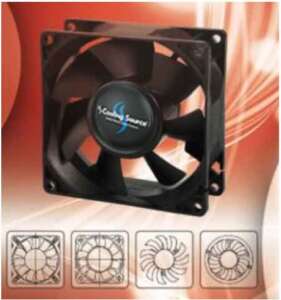
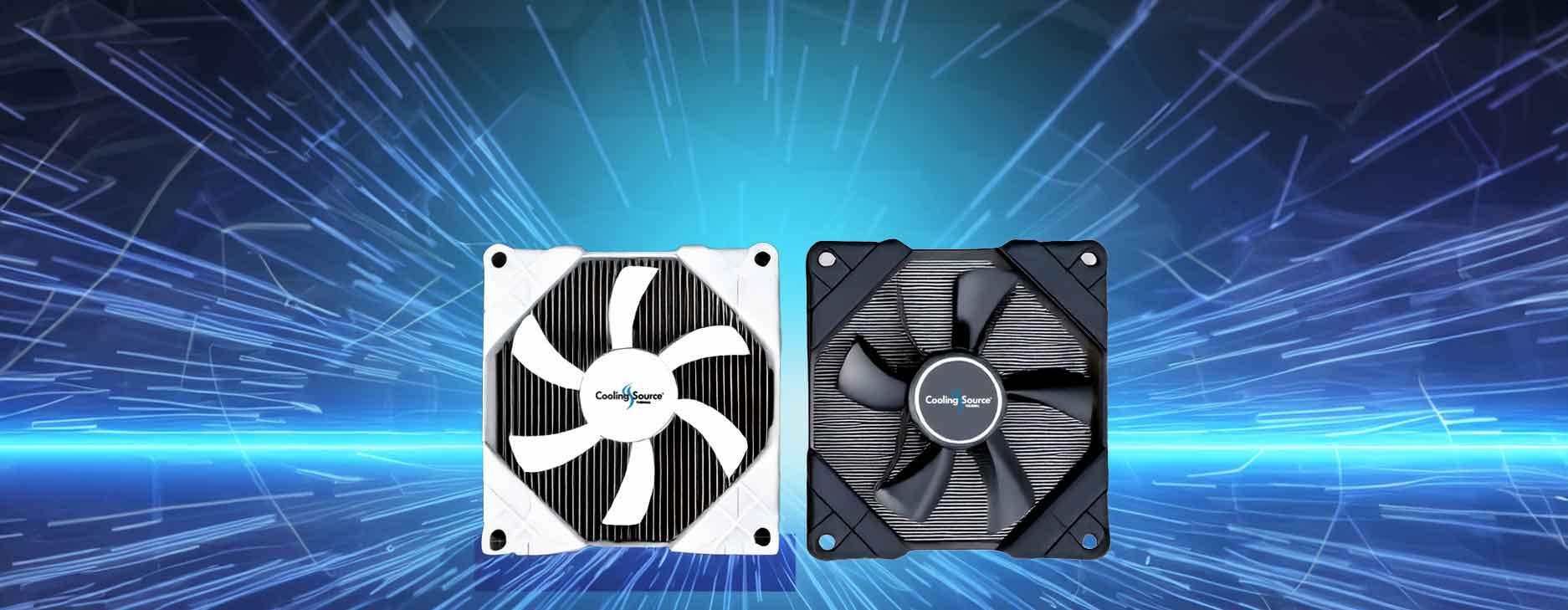
Fans and blowers are active cooling devices that force air across or through heatsinks to dramatically increase heat dissipation. They are essential when natural convection alone cannot meet thermal limits.
1. Capabilities
🔹 Airflow Enhancement
- Increase air velocity across heatsink fins
- Disrupt thermal boundary layers
- Improve convective heat transfer by 3×–10× compared to passive cooling
🔹 Compact Thermal Solutions
- Enable smaller heatsinks for the same thermal load
- Allow higher power density in confined enclosures
🔹 Targeted Cooling
- Direct airflow precisely where heat is generated
- Support localized hotspots (ICs, power modules, LEDs)
🔹 Scalability
- Available in a wide range of:
- Sizes (20 mm to 200+ mm)
- Voltages (5V, 12V, 24V, 48V)
- Airflow & static pressure ratings
🔹 Control & Monitoring
- PWM speed control
- Tachometer feedback
- Smart thermal response via system sensors
2. Fans vs. Blowers (Quick Comparison)
| Feature | Axial Fans | Centrifugal Blowers |
| Airflow direction | Parallel to shaft | 90° redirected |
| Static pressure | Low–medium | High |
| Best for | Open heatsinks | Dense fins / ducts |
| Noise profile | Lower | Slightly higher |
| Size efficiency | Larger footprint | More compact |
| Common use | CPUs, servers | Enclosures, EV modules |
3. Benefits
✅ Higher Thermal Performance
- Maintain safe junction temperatures
- Prevent thermal throttling or failure
✅ Increased Power Density
- Support higher wattage components
- Enable smaller, lighter systems
✅ Cost Optimization
- Reduce heatsink material (aluminum/copper)
- Lower overall system BOM
✅ Design Flexibility
- Work with extruded, bonded fin, skived fin, or folded fin heatsinks
- Effective in sealed or semi-sealed enclosures
✅ Reliability (When Properly Designed)
- Modern fans offer:
- Long-life bearings (ball, fluid dynamic)
- MTBF > 50,000–100,000 hours
- Redundancy possible in critical systems
4. Applications
🔌 Power Electronics
- AC/DC converters
- Inverters
- Motor drives
- UPS systems
💻 Computing & Data Centers
- CPUs, GPUs
- Power supplies
- Server racks
- Networking equipment
🚗 Automotive & EV
- On-board chargers
- DC/DC converters
- Battery management systems
- Inverter cooling (often blowers)
💡 LED Lighting
- High-power LED modules
- Architectural & industrial luminaires
- Outdoor and sealed fixtures
🏥 Medical Devices
- Imaging systems
- Diagnostic equipment
- Patient monitoring electronics
🛡️ Aerospace & Defense
- Rugged electronics
- Avionics modules
- Radar and communication systems
- Often combined with ducted blowers for controlled airflow
🏭 Industrial Automation
- PLCs
- Servo drives
- Control cabinets
- Robotics power electronics
5. Design Considerations (Critical)
- Static pressure vs airflow must match heatsink fin density
- Noise vs performance trade-off
- Dust, humidity, vibration environment
- Redundancy for mission-critical systems
- Thermal runaway protection if fan fails
👉 A poorly matched fan can reduce cooling effectiveness—fan selection is as critical as the heatsink design.
6. Passive vs Active Cooling (When Fans Are Needed)
| Scenario | Passive Only | Fan/Blower Required |
| <10–15 W | ✔ | – |
| 15–50 W | Sometimes | Often |
| >50 W | Rarely | ✔ |
| Enclosed system | ✖ | ✔ |
| High ambient temp | ✖ | ✔ |
Bottom Line
Fans and blowers transform heatsinks from basic heat spreaders into high-performance thermal systems.
They enable:
- Smaller designs
- Higher power density
- Lower cost
- Broader application reach
When engineered correctly, they are indispensable in modern thermal management.