 Cooling Source Is Now Part of Heatscape, Backed by Guardian Capital Partners.
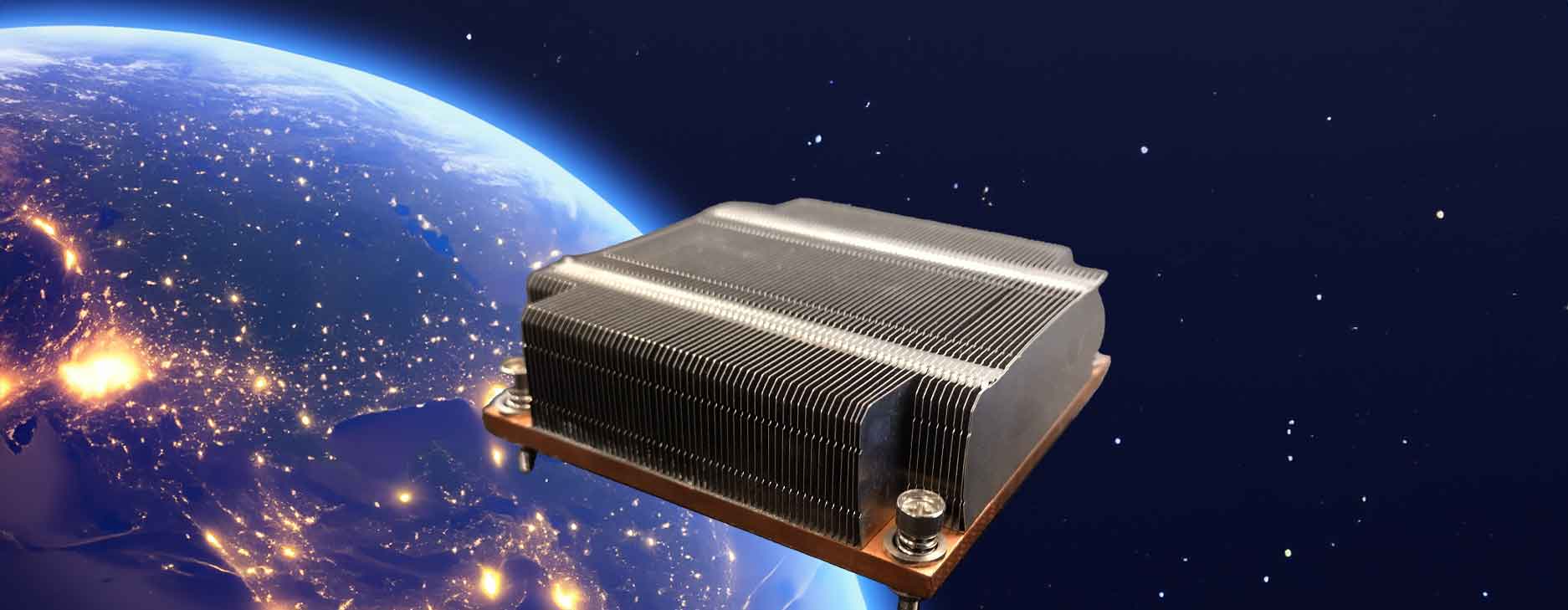
Industrial heatsinks
Are manufactured by aluminum extrusion, these heatsinks offer a cost-effective solution for medium to high power dissipation with customizable fin profiles.
Key Features:
- High thermal conductivity
- Lightweight and corrosion-resistant
- Scalable lengths and profiles
- Suitable for natural or forced convection
Common Applications:
- Industrial power supplies
- Motor drives and servo controllers
- PLC and automation systems
- Industrial inverters and converters
2. Bonded Fin Heatsinks
Description:
Bonded fin heatsinks use thermally bonded fins attached to a base, allowing higher fin density and improved airflow efficiency.
Key Features:
- Higher heat dissipation than extrusions
- Optimized fin spacing for forced airflow
- Suitable for compact, high-power designs
Common Applications:
- IGBT and MOSFET power modules
- Industrial UPS systems
- Variable frequency drives (VFDs)
- Welding and plasma cutting equipment
3. Skived Fin Heatsinks
Description:
Skived fin heatsinks are machined from a single block of metal, producing thin, closely spaced fins with excellent thermal performance.
Key Features:
- Very low thermal resistance
- High fin density
- No thermal interface between fins and base
Common Applications:
- High-power industrial electronics
- Laser power supplies
- RF and microwave systems
- Industrial computing and servers
4. Cold Forged Heatsinks
Description:
Cold forging compresses aluminum under high pressure to form dense, high-performance heatsinks with superior material integrity.
Key Features:
- Excellent thermal conductivity
- Strong mechanical structure
- Suitable for high-shock and vibration environments
Common Applications:
- Industrial controllers
- Robotics and automation equipment
- Heavy-duty power electronics
- Transportation and rail electronics
5. Liquid Cold Plates
Description:
Liquid cold plates remove heat using water or coolant flow, enabling efficient cooling of very high heat loads.
Key Features:
- Extremely high heat removal capability
- Compact thermal solution for high power density
- Stable temperature control
Common Applications:
- Industrial inverters and converters
- High-power motor drives
- Energy storage systems
- Factory automation with high continuous loads
6. Heat Pipe & Vapor Chamber Heatsinks
Description:
These heatsinks use phase-change technology to rapidly spread heat across the base and fins.
Key Features:
- Uniform heat distribution
- High efficiency in confined spaces
- Enhanced performance under transient loads
Common Applications:
- Industrial computing platforms
- Power amplifiers
- Communication and networking equipment
- Control cabinets with uneven heat sources
7. Active Heatsinks (Fan-Assisted)
Description:
Active heatsinks integrate fans or blowers to increase airflow and thermal performance.
Key Features:
- Higher heat dissipation than passive designs
- Compact footprint
- Suitable for enclosed systems
Common Applications:
- Industrial PCs and HMIs
- Power control units
- Enclosed automation cabinets
- Industrial test and measurement equipment
Key Industrial Applications
Industrial heatsinks are widely used in:
- Factory automation and robotics
- Motor drives, servo drives, and VFDs
- Industrial power supplies and UPS systems
- Renewable energy and energy storage equipment
- Rail, transportation, and heavy machinery electronics
- Industrial computing, networking, and control systems
Why Industrial Heatsinks Matter
- Ensure reliable 24/7 operation
- Protect sensitive electronics from thermal failure
- Extend system lifespan and reduce downtime
- Support higher power density and compact designs
- Perform consistently in harsh environments