
All of Canada;
Dominic Dupuis
President
Solutions Design ASDI Inc.
514 833-2280
ddupuis@astecsdi.ca


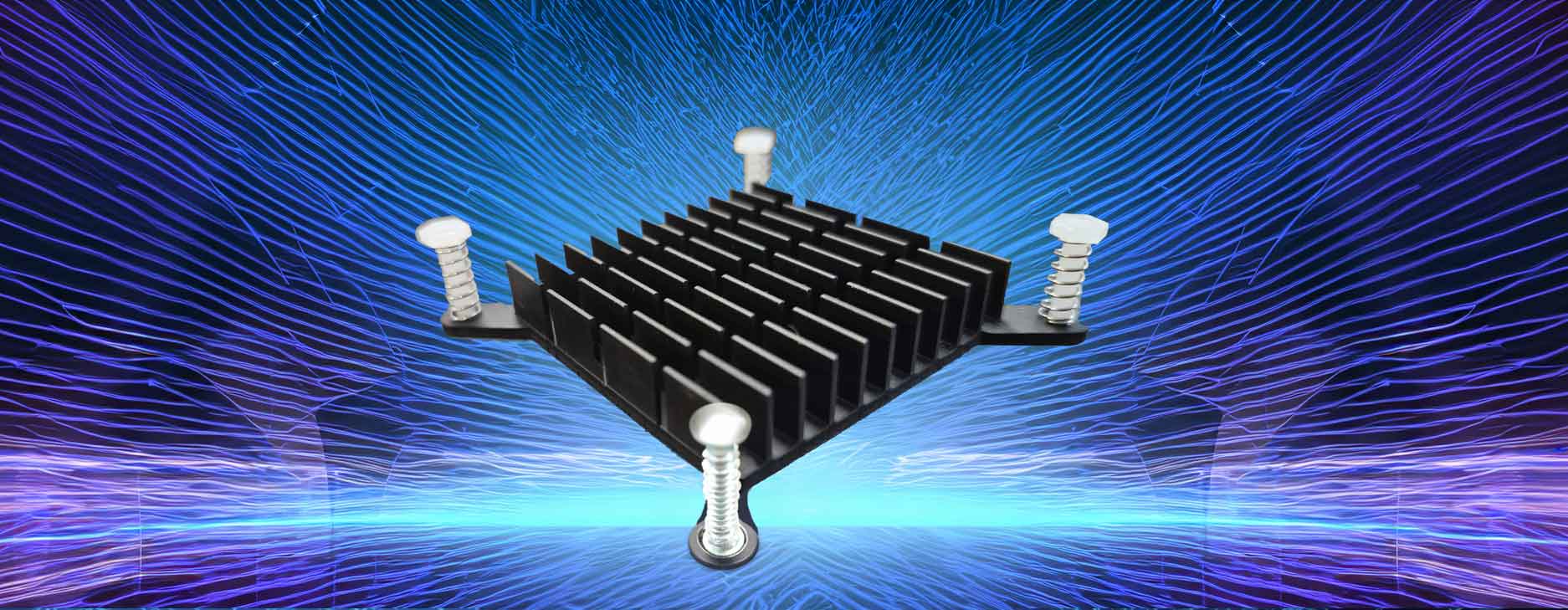
Cooling Source’s CS867 Series extruded push-pin pin-fin heatsinks are engineered for applications requiring mechanically secure attachment, repeatable thermal performance, and serviceability. The spring-loaded push-pin retention system maintains consistent interface pressure under shock, vibration, and thermal cycling—making these solutions well suited for mission-critical electronics.
Manufactured from high-conductivity aluminum with a black anodized finish, the pin-fin geometry provides omnidirectional airflow capability and low system pressure drop, supporting efficient cooling in constrained or unpredictable airflow environments.
ITAR-controlled and defense-grade programs can be supported through U.S.-based engineering oversight, controlled documentation, and compliant manufacturing pathways when required.
Best for: processors, power ICs, FPGAs, industrial and telecom electronics.
Material:
Thermal Design:
Mounting Method:
Interface Material:
Configuration Options:
Availability:
| Feature / Criteria | Push-Pin Mount | Screw Mount |
| Installation Time | Tool-less, fast installation | Slower, requires torque tools |
| Mounting Pressure | Spring-loaded, self-regulating | Torque-dependent, operator-sensitive |
| Pressure Uniformity | Consistent across installations | Can vary with torque accuracy |
| Vibration Resistance | Excellent (spring maintains preload) | Good, but may loosen over time |
| Thermal Consistency | Highly repeatable thermal impedance | Can vary with torque and washer stack |
| Reworkability | Easy removal and replacement | Risk of PCB damage during rework |
| PCB Stress | Low, compliant attachment | Higher localized stress |
| Assembly Cost | Lower (no tools, faster cycle time) | Higher labor and tooling cost |
| Serviceability | Excellent | Moderate |
| Best Use Case | High-volume, serviceable designs | Permanent or heavy heatsinks |
Summary:
Push-pin mounting offers greater consistency, lower assembly cost, and superior serviceability, while screw mounting is best reserved for heavy or permanent thermal assemblies.
Push-pin heatsink mounting is preferred in modern electronics where repeatability, vibration tolerance, and manufacturability are critical.
Key engineering advantages:
When to choose screw mounting:
Need help selecting the right push-pin heatsink?
Cooling Source’s engineers can assist with thermal modeling, airflow analysis, and product selection to ensure optimal performance for your application.
All of Canada;
Dominic Dupuis
President
Solutions Design ASDI Inc.
514 833-2280
ddupuis@astecsdi.ca